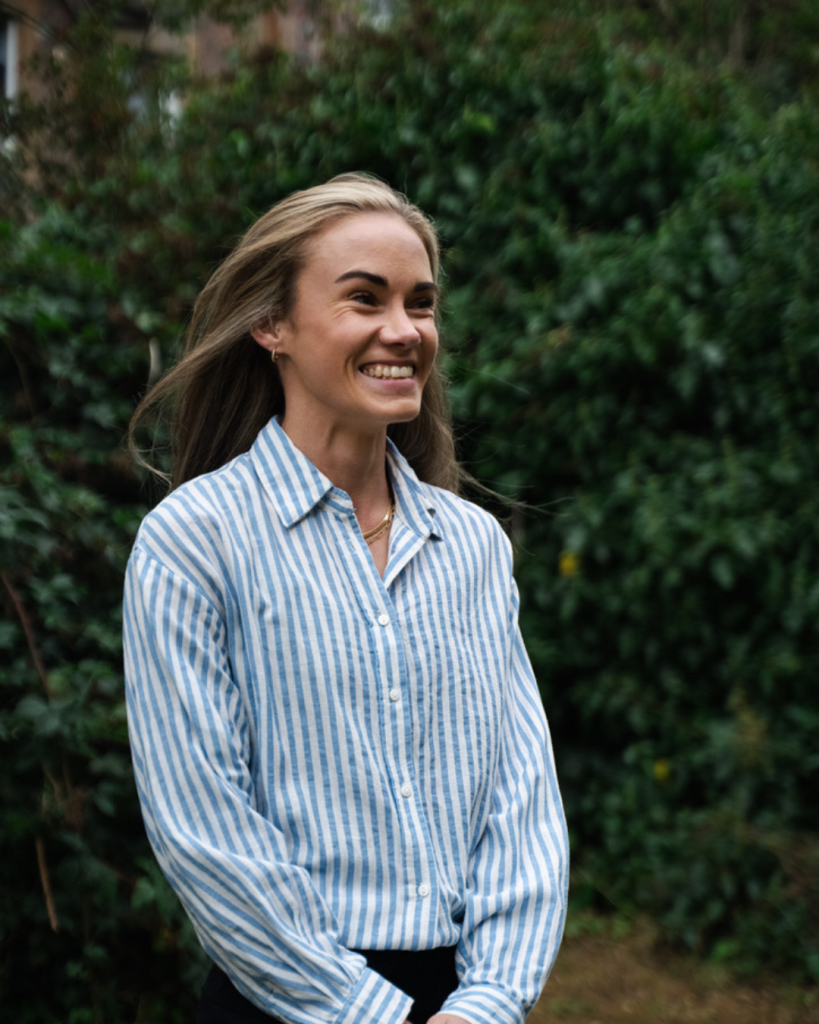
Sara Eydmann is a COSCA accredited and BACP-registered integrative therapist based in the UK but clients can access from anywhere in the world. She specialises in eating disorders, neurodivergence and supporting people within sport, including athletes navigating the overlap between food, body image, identity and performance. She works with teenagers, young adults and adults, and her approach is focused on the person in front of her rather than asking anyone to fit a fixed therapeutic model.
Why Sara Chose Therapy
Sara has always been interested in understanding why people think, feel and behave the way they do. For a long time, she assumed psychology would be her long-term route – a natural fit for that curiosity. But over time, she realised she did not want to work by placing people into rigid models or diagnostic boxes. She wanted something more human than that.
Counselling offered a different way of working: collaborative, flexible, and shaped by the person actually in the room rather than a set programme they were expected to fit into. That belief still sits at the centre of how she practises today – the person shapes the work, not the other way round.
What Does Being an Integrative Therapist Mean?
Being an integrative therapist trained professional means drawing on more than one therapeutic model rather than following a single fixed script. Sara draws mainly from person-centred and psychodynamic approaches – the first rooted in the belief that clients are the experts on their own experience, the second interested in how earlier relationships and patterns can continue to shape present-day life.
In practice, this means the work can change depending on what a client needs. Clients set the pace, and Sara can offer gentle challenge and curiosity where it feels useful, rather than where a manual says it should happen. Therapy with her can explore both present-day difficulties and patterns or relationships from earlier life, moving between the two as it makes sense to.
Why Sara Specialises Rather Than Working With Everything
Sara would rather do a smaller number of things well than offer something for everyone. Her specialist interests – eating disorders, neurodivergence, and athletes and sport – have developed through professional training, personal experience, and noticing where existing support fell short. These three areas often overlap in practice, which is exactly why specialist knowledge matters: someone navigating disordered eating within a neurodivergent brain, or an athlete whose relationship with food has become entangled with performance pressure, needs a therapist who understands more than one piece of the picture at once. Sara does not present herself as a therapist for every possible issue, and that is intentional.
Sara’s Work With Eating Disorders and Disordered Eating
Sara works with eating disorders, disordered eating, body image concerns, and complicated relationships with food, exercise and control. Her approach considers the whole person rather than reducing someone to a diagnosis, because food difficulties often overlap with identity, perfectionism, neurodivergence, sport and wider emotional experience. A formal diagnosis is not required before someone can start exploring their relationship with food in therapy, and where appropriate, her work is designed to complement -not replace – medical or nutritional support. As an eating disorder therapist practising fully online, she offers eating disorder counselling shaped around the individual, not a fixed programme.
Sara’s Interest in Neurodivergence, ADHD and Autism
Sara has a particular interest in ADHD, autism and wider neurodivergence, and personal experience has helped shape this part of her work. Neurodivergence can affect sensory needs, routines, relationships, identity, communication, masking, and someone’s relationship with food and eating – often in ways that go unrecognised elsewhere. As a neurodivergent therapist, clients can talk to without needing to explain the basics, Sara adapts therapy to the individual rather than expecting neurodivergent clients to fit a standard model. People can work with her whether they are diagnosed, undiagnosed, or currently exploring whether they might be neurodivergent – as an ADHD autism therapist, she is comfortable meeting people at any stage of that process.
Supporting Athletes and People Within Sport
Sara works with athletes from club level through to high-performance environments. Relevant themes in this work can include body image, eating difficulties, RED-S, perfectionism, identity, performance pressure, and exercise becoming tangled up with control. Sport can be a positive part of someone’s life while still creating environments where the person underneath the athlete gets overlooked – where discipline is praised without anyone asking what it’s costing.
Sara understands sporting culture personally, as a runner and ultra runner herself, and this gives her a grounded, first-hand sense of what athletes are describing. But her role with clients is psychological support – not nutrition or sports medicine – and she is clear about that distinction. As a therapist for athletes offering sport counselling UK, she works alongside other professionals where needed.
How Running Shapes Sara’s Perspective
Running is a major part of Sara’s life. She runs road and trails, long distances and ultras at an elite level. This experience gives her a first-hand understanding of training culture, identity, performance expectations and the pressure that can build around all three. It is worth being clear that being an athlete does not, on its own, qualify her clinically – her sporting life complements her professional therapeutic training, rather than standing in for it. It simply means that when a client describes the fear of missing a session, or the identity wrapped up in a race number, she has stood somewhere close to that feeling herself.
What Is Therapy With Sara Actually Like?
Therapy with Sara is warm, collaborative, and direct where that is useful. She does not position herself as the person with all the answers – client and therapist work together, and the client sets the pace throughout. She will not push anyone into conversations they are not ready for, though she may gently challenge patterns where doing so could be helpful. There is no fixed number of sessions, and therapy can evolve as someone’s needs change over time. This is online counselling built around flexibility rather than a rigid course of treatment, delivered as online therapy sessions from wherever you are.
Sara Eydmann’s Qualifications and Professional Background
Sara is a BACP registered counsellor, a member of the British Association for Counselling and Psychotherapy. Her professional background includes:
- Postgraduate Diploma in Counselling Studies – University of Edinburgh, COSCA-accredited, 2025
- BA (Hons) Psychology with Sociology – Edinburgh Napier University, 2019
- Clinical placements at Health in Mind, ESMS Schools, and West End Therapy Centre
- Certificate in Understanding Mental Health First Aid and Mental Health Advocacy in the Workplace
- Level 2 Certificate in Understanding Adverse Childhood Experiences
- Understanding Eating Disorders for Fitness Professionals – Anorexia & Bulimia Care, CIMSPA-endorsed, 2021
Sara is a counsellor and psychotherapist, not a psychologist, and her training and continuing professional development reflect her specialist focus on eating disorders, neurodivergence and sport.
Who Does Sara Work With?
Sara works with teenagers, young adults and adults, from any location as it is a fully online service. This includes people experiencing eating disorders or disordered eating, people who are ADHD, autistic or otherwise neurodivergent, athletes and people involved in sport, and – often – people who sit across more than one of these areas at once.
Frequently Asked Questions
Is Sara Eydmann a registered therapist?
Yes. Sara Eydmann is a registered member of the British Association for Counselling and Psychotherapy (BACP).
What type of therapist is Sara Eydmann?
Sara is an integrative therapist who draws mainly from person-centred and psychodynamic approaches.
What does Sara Eydmann specialise in?
Her main specialist areas are eating disorders and disordered eating, neurodivergence including ADHD and autism, and supporting athletes and people within sport.
Does Sara Eydmann offer online therapy?
Yes. Sara offers online counselling to clients across the UK.
Does Sara work with eating disorders?
Yes. Sara supports people experiencing eating disorders, disordered eating, body image difficulties and complicated relationships with food, exercise and control.
Does Sara work with autistic and ADHD clients?
Yes. Neurodivergence is one of Sara’s main specialist areas, including ADHD, autism and people who may still be exploring whether they are neurodivergent.
Does Sara offer therapy for athletes?
Yes. Sara works with athletes and people within sport, including around eating, body image, perfectionism, identity, RED-S and performance pressure.
How to Work With Sara
Therapy is available online across the UK, and you do not need to know exactly what kind of therapy you require before making contact. You can share a little about what is bringing you to therapy, and Sara can advise whether she may be the right person to support you.
Conclusion
Sara’s work is grounded in the idea that therapy should fit the person, rather than asking the person to fit therapy. Whether someone is navigating an eating disorder, exploring neurodivergence, dealing with the pressures of sport, or experiencing an overlap between these areas, the starting point is always the individual.
Contact Sara Eydmann to find out more about online integrative therapy across the UK.