Eating disorder therapy that starts with the person.
I offer online eating disorder counselling for teenagers, young adults and adults. My approach is integrative and shaped around you, whether you are dealing with an eating disorder, disordered eating, body image concerns, or a relationship with food and exercise that has become difficult to manage.
You do not need to know exactly what to call it.
You might already have an eating disorder diagnosis. You might be worried that your relationship with food, your body or exercise is becoming harder to manage. Or you might simply know that something does not feel right.
Eating disorders do not always look the way people expect them to. You do not have to reach a particular point, look a particular way or have the perfect explanation before asking for support.
Therapy can give us space to understand what is happening, what may be sitting underneath it, and what support actually makes sense for you.
What we might explore together.
There is no standard list that every person has to work through. These are some of the areas that can form part of eating disorder therapy, depending on what is happening for you.
Food + control
Thoughts, rules, routines or anxiety around food, eating and control that are taking up increasing amounts of time and mental space.
Body image
Difficult feelings about your body, appearance, weight, shape or the way your body is perceived by other people.
Exercise + performance
When movement, training or performance becomes closely tied to food, body image, self-worth, rules or a sense of needing to earn rest.
What sits underneath
Identity, perfectionism, relationships, earlier experiences, pressure or other patterns that may be connected to what is happening now.
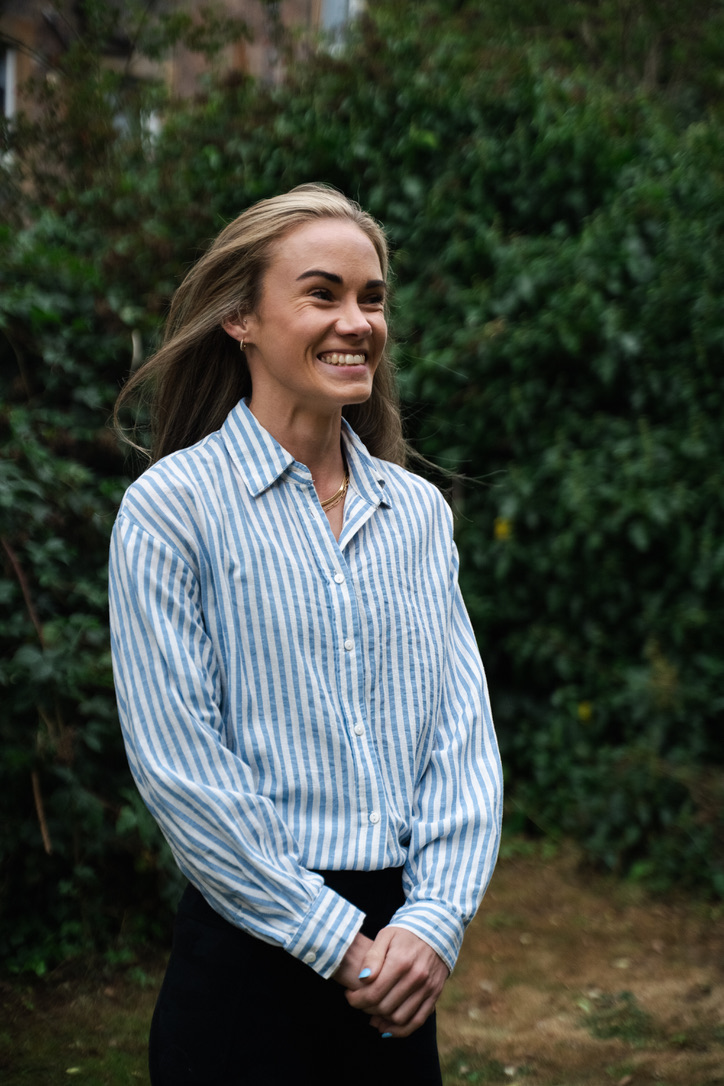
Your eating disorder is not the whole of you.
I work integratively, drawing mainly from person-centred and psychodynamic approaches. That gives us room to look at the eating disorder without reducing everything about you to a diagnosis or set of symptoms.
You set the pace, and we work collaboratively rather than following a fixed script.
We can look at what is happening now as well as patterns or experiences from earlier in life.
I can be direct and challenging when that is useful, rather than only validating what is already there.
There is no fixed length of therapy. The work can adapt as your needs change.
Sometimes these things are more connected than they first appear.
ADHD, autism and other forms of neurodivergence can shape sensory needs, routine, interoception, identity, masking and a person's relationship with food. For some people, understanding that overlap becomes an important part of making sense of what is going on.
Explore neurodivergent counselling →If you are worried about your teenager, you can contact me too.
Parents are often the first people to notice that something has changed. You may be seeing increasing anxiety around food, changes in eating or exercise, body image concerns, withdrawal, new routines or simply a sense that your teenager is not themselves.
You do not need to diagnose what is happening before making contact. You can tell me what you have noticed and I can let you know whether my work may be appropriate.
Eating disorder support for teenagers →You can get in touch if...
- You are worried about changes in eating, exercise or body image.
- Your teenager is struggling but does not have a formal diagnosis.
- You are unsure what kind of support would be appropriate.
- You want to understand whether online counselling could be a suitable next step.
What happens when you get in touch?
Tell me a little about what is happening
You do not need to write everything down. A short message explaining what has brought you here is enough to start.
I will let you know whether I may be the right fit
My practice is intentionally focused, so I will be clear about whether the support you are looking for sits within the areas I work with.
Sessions take place online via Zoom
I work fully online with clients across the UK and try to keep scheduling flexible around school, work, training and other commitments.
Specialist support, without losing sight of the person.
I am an integrative therapist with a Postgraduate Diploma in Counselling Studies from the University of Edinburgh. My additional training includes eating disorders, mental health and adverse childhood experiences, and I have worked across mental health, school and therapy settings.
More about Sara + training →You do not have to work that out before contacting me.
Tell me a little about what is happening and I can let you know whether I may be the right person to support you.